Sometimes, a single sentence from the right book can soften a hardened heart or open a door that’s long been shut. For those working to bridge divides—faith leaders, educators, volunteers, and community organizers—books are some of the most powerful tools for connection. In quiet ways, they help us hold space for complexity, difference, and grace.
This list highlights books that interfaith organizations use to promote understanding and spark reflection, empathy, and meaningful dialogue. Whether passed from hand to hand or used as the foundation for group study, these titles can build peace, one reader at a time.
1. The World’s Religions by Huston Smith
A classic in the field of religious studies, The World’s Religions offers a comprehensive overview of major global faiths, presented with both depth and reverence. Huston Smith, a lifelong scholar and practitioner, doesn’t just describe rituals or doctrines; he captures the spirit of each tradition. From Hinduism and Buddhism to Christianity, Judaism, and Islam, Smith presents religious beliefs as living experiences, not just historical facts.
Interfaith organizations often use this text as a foundational resource, especially when introducing members to unfamiliar traditions. It delivers sufficient detail to ground discussions while remaining accessible to readers of all backgrounds. For groups committed to respectful dialogue, Smith’s work encourages curiosity without judgment and provides a shared language that facilitates meaningful engagement.
2. God Is Not One by Stephen Prothero
Stephen Prothero’s God Is Not One takes a provocative but necessary stance: not all religions are fundamentally the same, and pretending they are can do more harm than good. Rather than glossing over differences, Prothero argues that understanding begins with acknowledging them. His book outlines the distinct goals and challenges each religion seeks to address, giving readers a transparent view of the spiritual landscape.
This candid approach is particularly useful for interfaith groups seeking to move beyond superficial discussions. When people learn to sit with tension instead of avoiding it, deeper respect and empathy often follow. God Is Not One invites groups to embrace nuance and foster grounded and productive conversations.
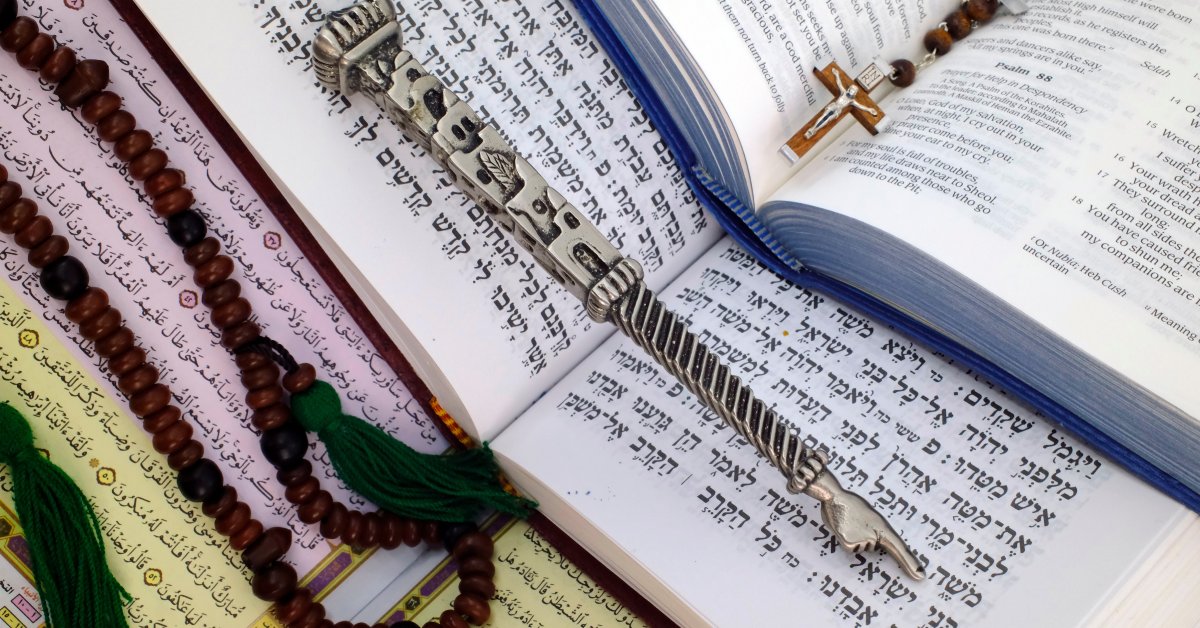
3. The Faith Club by Ranya Idliby, Suzanne Oliver, and Priscilla Warner
The Faith Club chronicles the real-life journey of three women—a Muslim, a Christian, and a Jew—who came together in the wake of 9/11 to discuss their faiths. What started as a desire to help their children understand religion evolved into raw, vulnerable, and difficult conversations about identity, fear, and friendship.
This memoir offers an intimate glimpse into what candid dialogue truly requires. It’s not polished or easy, but it is powerful. Readers are drawn into the emotional layers of interfaith relationships and pushed to examine their own assumptions. Because the voices come from everyday people, the book feels approachable and sincere, making it an excellent choice for small groups or those beginning their interfaith work.
4. A History of God by Karen Armstrong
Karen Armstrong’s A History of God is a sweeping exploration of how the concept of God has evolved within the Abrahamic faiths—Judaism, Christianity, and Islam. Drawing on history, theology, and philosophy, Armstrong traces the growth of human understanding of the divine over centuries, often in response to shifts in cultural and political contexts.
Interfaith groups appreciate this book for its ability to bridge historical scholarship with contemporary relevance. By examining how ideas of God have evolved, readers can develop an awareness of the shared roots and divergent paths of major traditions.
Armstrong’s accessible tone and profound insight make this an ideal resource for groups aiming to strengthen their understanding of monotheistic belief systems without alienating opposing perspectives.
5. The Anatomy of Peace by The Arbinger Institute
The Anatomy of Peace presents a philosophy rooted in empathy, self-awareness, and shared humanity. Written as a narrative between a group of parents and conflict resolution experts, the book explores how we unknowingly perpetuate conflict when we view others as obstacles rather than individuals. It’s practical, relatable, and deeply reflective.
Many organizations turn to this title when navigating difficult conversations or attempting to build bridges between groups with contrasting views. Its message is particularly resonant in religious settings where emotions run deep. By emphasizing internal change as the catalyst for external peace, The Anatomy of Peace helps readers shift from judgment to compassion and build authentic interfaith dialogue.
6. No God but God by Reza Aslan
Reza Aslan’s No God but God provides a straightforward and thoughtful introduction to Islam’s history, evolution, and internal diversity. Aslan’s writing is conversational and compelling, making complex theology and historical context easy to digest. His insights challenge stereotypes and shed light on the cultural and political forces that have shaped Islamic thought over time.
Any group seeking to incorporate accurate representations of Islam into their programming should consider this book a valuable resource. It not only grants clarity but also fosters admiration for Islam’s depth and diversity. Aslan’s work helps readers move beyond headlines and into a space of genuine engagement, an important goal when groups come together for mutual study.

7. The Essential Gandhi edited by Louis Fischer
Compiled and edited by journalist Louis Fischer, The Essential Gandhi is a curated collection of Gandhi’s most impactful writings, speeches, and letters. The book presents Gandhi as a thinker, a strategist, and a spiritual leader whose commitment to nonviolence was deeply rooted in religious values and human dignity.
Interfaith groups often gravitate toward this collection because it highlights how spiritual conviction can inspire social transformation. Gandhi’s reflections on tolerance, peace, and justice transcend any single religion, making them ideal for multifaith audiences. His ability to blend political activism with personal ethics continues to resonate in settings where tolerance and cooperation are the goals.
8. Peace Is Every Step by Thich Nhat Hanh
Thich Nhat Hanh’s Peace Is Every Step is grounding and serenely profound. Hanh introduces mindfulness as a spiritual practice woven into everyday life. Through short chapters and simple exercises, the Zen Buddhist monk shows how awareness, compassion, and presence can transform even mundane moments.
Peace Is Every Step offers a calming counterbalance to heavier theological texts often used in interfaith settings. It reminds readers that peace begins within and that spiritual practice isn’t confined to places of worship. Many organizations utilize Peace Is Every Step in interfaith retreats or small group discussions to encourage reflection, gratitude, and inner calm—qualities that benefit dialogue and personal well-being.
Inviting Unity Through Literature
Anyone who’s led an interfaith conversation knows that it’s about trust. The books we place in our circles matter. They frame the tone of a conversation, shape expectations, and remind us what’s possible when we choose to listen.
If you’re curating your next reading list, BulkBooks.com can help you source the books interfaith organizations use to promote understanding. We make it easy to buy religious books in bulk while offering the personalized support that values-based work deserves.